
The Clerk of the Superior Court in Stanislaus County
In California, the trial-court records for a county are kept by the Superior Court clerk, not a separate elected official. That makes the Clerk of the Superior Court the office of record for case files in Stanislaus County. The clerk takes filings, keeps the case index, schedules hearings, and issues copies.
This is different from the County Clerk-Recorder. The Clerk-Recorder keeps deeds, vital records, and marriage licenses, while the court clerk keeps the case dockets. Mixing the two is the most common mistake people make, so it is worth keeping them straight from the start.
California reached this setup through trial court unification, which merged the old municipal and superior courts into one Superior Court per county. Because of that change, there is no district clerk and no county-level municipal clerk for court cases. One clerk's office handles the whole trial court. That keeps the path to a case file simple: whatever the division, the Superior Court clerk is the office of record.
What the Court Clerk Handles
The court clerk touches nearly every case in the county. Its work spans intake, recordkeeping, and public access. The list below covers the main functions.
- Accepting civil, criminal, family, probate, small claims, and traffic filings.
- Maintaining the public case index and the docket for each case.
- Scheduling hearings and issuing court notices.
- Providing copies and certified copies of public records.
- Supporting eFiling and remote services through the court's online tools.
For the records side of this work in detail, see court records and court dockets.
The clerk is also the gatekeeper for public access. It decides, under the court rules, what can be released at the counter and what must stay sealed. So when a record is confidential, such as a juvenile or adoption file, the clerk applies the law that keeps it closed. The office balances open access with the privacy rules the state sets, and it is the first place to ask when you are unsure whether a record is public.
Searching Stanislaus County Court Records Through the Clerk
The clerk publishes public case data on the Case Index Lookup. You can search it yourself before you ever contact the office. The table lists the fields the portal uses.
| Field Label | Type | Required | Notes |
|---|---|---|---|
| Case Number | Text | Only for number search | Use the exact Superior Court number. |
| Last Name / Business Name | Text | Only for name search | Party surname or company name. |
| First Name | Text | No | Narrows a person search. |
| Case Type / Category | Dropdown | No | Civil, criminal, family, probate, and more. |
| Filing Date From / To | Date | No | Narrows older searches. |
Open the Superior Court case index to run a search. If a document is not online, the clerk can provide it through a copy request.
How to Request a Certified Copy
A certified copy carries the court's seal and is the version that agencies and other courts accept. A plain copy is fine for personal reference but is not proof in a legal matter. Use these steps to request a certified copy from the clerk.
- Find the case in the Superior Court case index and note the case number.
- Identify the exact document you need, such as a judgment or an order.
- Contact the clerk or use the court's copy-request process, including the civil case research process for older files.
- Pay the copy and certification fees the court sets.
- Receive the certified copy with the court seal for legal use.
For civil files, the court keeps a dedicated case research process that explains file retrieval, research, and copies. Older cases may be imaged or stored off-site, so a certified copy of an old judgment can take longer than a recent one. Call ahead for anything that is not a current case. When you collect the copy, check that the seal and the case details are correct before you rely on it, since an agency will reject a copy with the wrong case number.
Court Filing and Copy Fees
The court charges filing fees and copy fees. Filing fees follow California's statewide civil fee schedule, which the court applies to new cases. Copy and certification fees apply when you order documents from a file.
If you cannot afford a fee, the court accepts fee-waiver requests. The local fee-waiver packet and the statewide forms walk you through eligibility. Because published fee line items change, confirm the current amount with the clerk before you file or order copies. The Self-Help Center can help with the waiver forms if cost is a barrier.
It helps to separate the kinds of fees. A filing fee is what you pay to start a case. A copy fee is what you pay to get documents from a file. A certification fee is added when you need the court seal. Each is set separately, and a fee waiver can cover filing costs for those who qualify. Keep your payment receipt, since proof of a paid fee can matter later in a case.
Forms and Self-Help
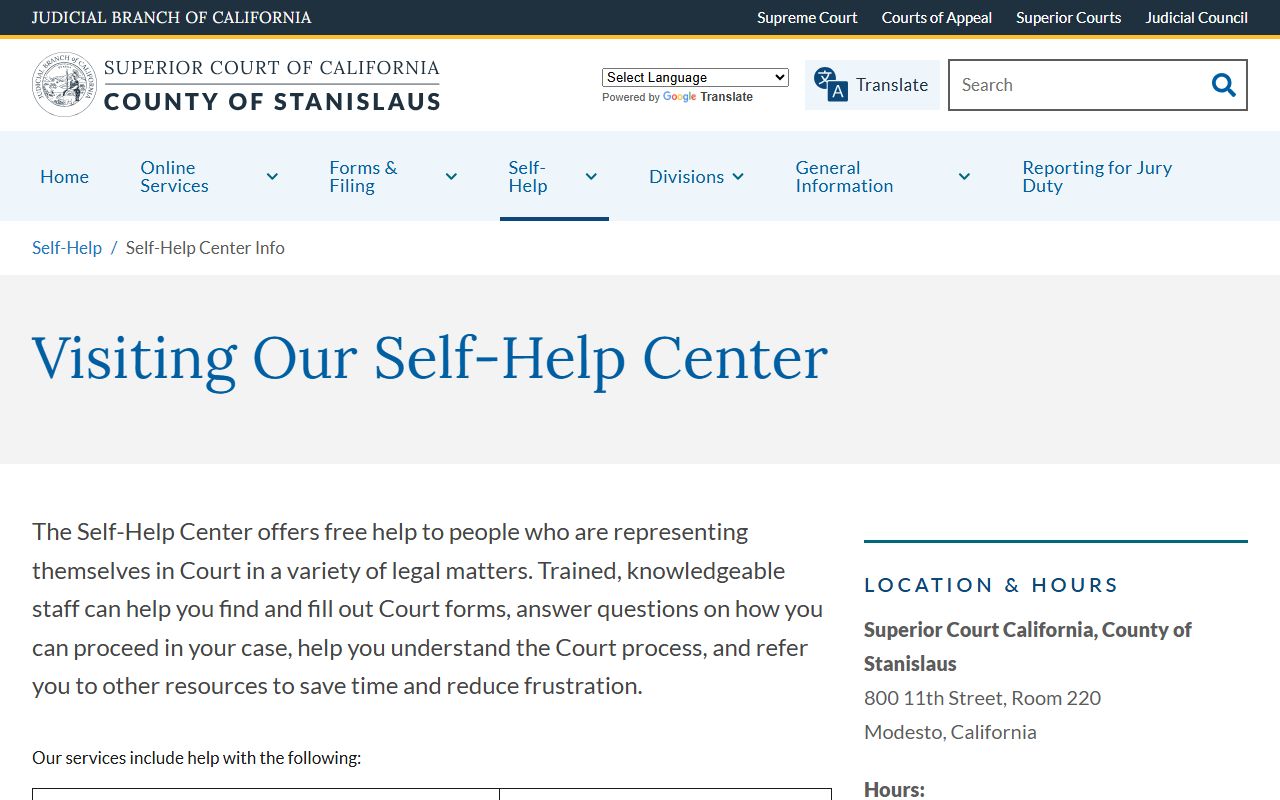
The clerk does not give legal advice, but the court provides strong self-help tools. The Self-Help Center assists people who do not have a lawyer with forms and procedure across many case types.
The Self-Help Center in Room 220 helps with custody, support, divorce, restraining orders, guardianships, small claims, and expungements.
Statewide forms are also a click away. The California Courts forms finder holds the Judicial Council forms used in every Superior Court.
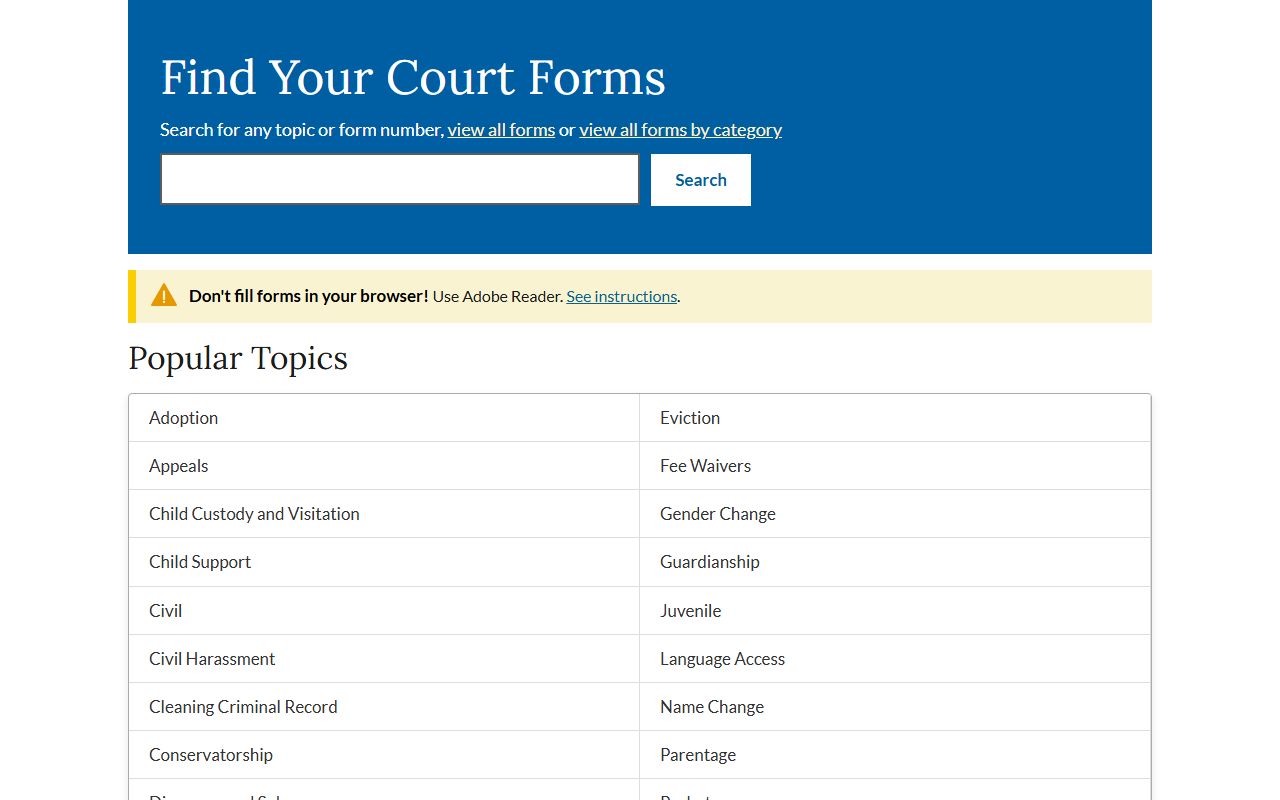
Using the correct form is half the battle, and these tools point you to the right one. The Self-Help Center serves walk-in customers on a first-come basis and answers email within a couple of business days when you include your name, phone, case number, and a short description. It cannot represent you, but it can help you prepare paperwork and understand the procedure, which is exactly what most self-represented people need.
Court Clerk vs. County Clerk-Recorder
Two offices share the word clerk, and they do very different jobs. The comparison block sorts out which office keeps what, so you send each request to the right place.
| Clerk of the Superior Court | County Clerk-Recorder | |
|---|---|---|
| Keeps | Court case files and dockets | Deeds, vital records, marriage licenses |
| Search tool | Case Index Lookup | Recorded document and vital record requests |
| Use for | Lawsuits, charges, divorce, probate | Property records, birth, death, marriage |
For the Clerk-Recorder side, see the County Clerk-Recorder page. A quick rule of thumb: if your record came out of a court case, ask the court clerk. If it is a recorded document or a vital record, ask the Clerk-Recorder. Getting this right on the first try avoids a wasted trip across town, since the two offices sit in different buildings and keep different files.
Clerk of the Superior Court Contact
Court filings and the clerk's public counter are at the Main Courthouse in downtown Modesto. The contact card has the main details, and the court's general information page lists hours and services.
Clerk of the Superior Court
Main Courthouse
800 11th Street
Modesto, CA 95354
(209) 530-3100
The Self-Help Center is in Room 220 of the same building for people who need help with forms. Check the court's current hours and any ADA or interpreter needs before you visit, since those are arranged through the court rather than assumed at the counter. Security screening is standard, so plan a little extra time on arrival.