
How to Search Stanislaus County Probate Records
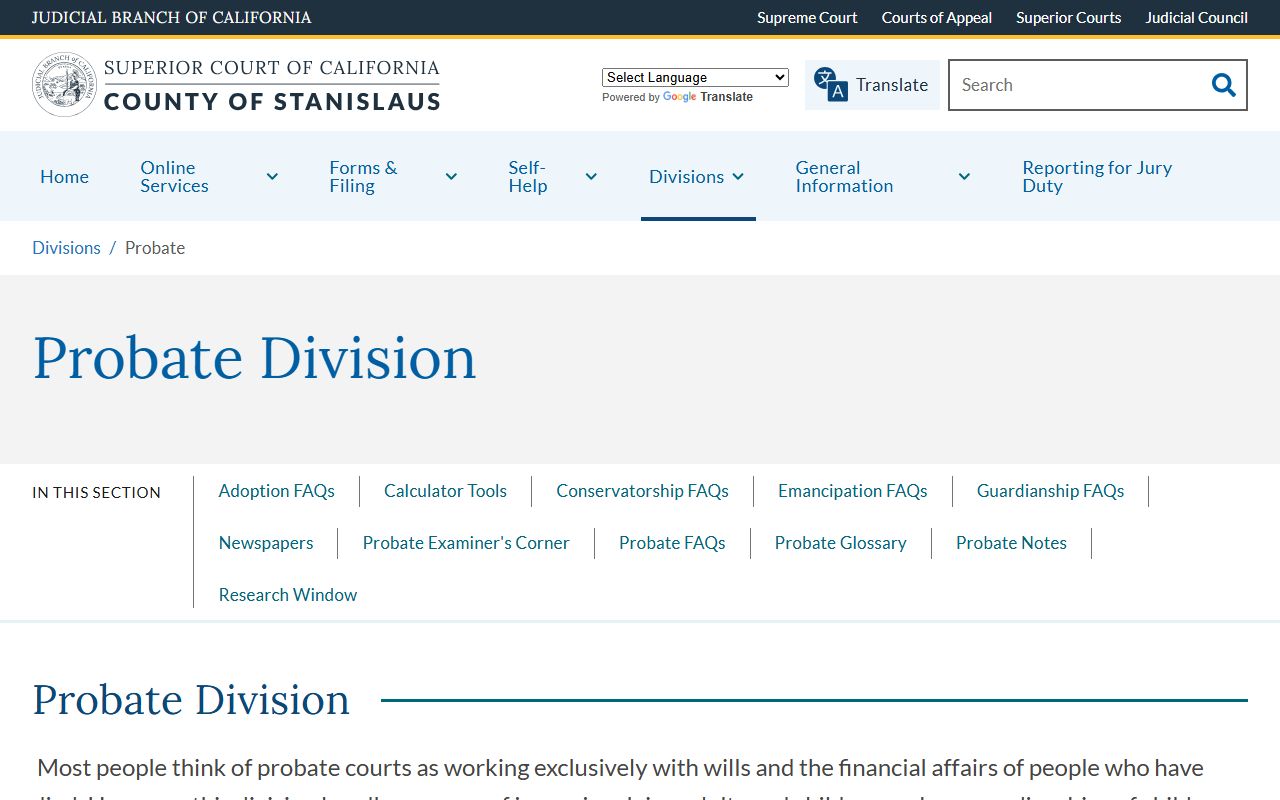
Probate cases sit in the Superior Court case index, just like civil and family cases. You search by case number or by the name of a party, such as a decedent, petitioner, conservatee, or ward. The court's Probate Division handles the underlying matters, and its page explains the scope.
The Probate Division page covers estates, trusts, conservatorships, guardianships, adoptions, and name changes.
Start at the Superior Court case index and search a probate-related category if the portal offers it. Older files, sealed adoption material, and confidential medical records may need direct contact with the Civil or Probate clerk.
Probate is not a Clerk-Recorder matter, and that trips people up. The Clerk-Recorder keeps deeds, vital records, and recorded documents, but a probate estate is a court case. So a search for who inherited a property, or who was appointed to handle an estate, runs through the court index, while the recorded deed that follows a distribution shows up later at the Clerk-Recorder. Knowing the difference keeps your search on track.
What the Probate Division Handles
Probate is broader than wills. The division manages how property passes after a death, and it also protects people who cannot manage their own affairs. The table lays out the main petition types and what each one covers.
| Petition Type | What It Covers |
|---|---|
| Estate administration | Transfer of a decedent's property, with or without a will. |
| Probate of will | Proving a will and appointing a representative. |
| Trust petition | Disputes or actions involving a trust. |
| Conservatorship | Court management for an adult who cannot manage their own affairs. |
| Guardianship | Court authority over a child or a minor's estate. |
| Adoption / name change | Adoption matters and legal name changes. |
Each petition type follows its own forms and notice rules, but all run through the same Probate Division. Name changes and certain adoptions sit here as well, which surprises some people who expect them elsewhere. Because the division covers both property and personal-status matters, it touches a wide range of life events, from settling an estate to protecting a child or an elder.
What a Stanislaus County Probate Record Shows
A public probate record carries a set of fields, much like other court cases. What appears depends on the petition type and whether parts of the file are confidential. The list below covers the common fields.
- The decedent, conservatee, ward, minor, or adoptee name where public.
- The case number and the petition type.
- The filing date and any hearing date.
- The petitioner and the attorney of record.
- Orders, letters, inventory and appraisal, accountings, and notices.
Confidential attachments, such as medical evaluations in a conservatorship, may be unavailable to the public.
The financial records in a probate case can be detailed. An estate file may include an inventory and appraisal of assets, creditor claims, and accountings that show how money moved through the estate. These help heirs and the court track the administration. Even so, a sensitive document inside a public case can be sealed, so the docket entry may show that a report was filed without making the report itself public.
How Probate Works in Stanislaus County
A probate case follows a set path from filing to distribution. The exact steps depend on the estate and whether a small-estate procedure applies. The Self-Help Center can guide a person who does not have a lawyer.
- Decide whether a full probate is required or a small-estate procedure applies under California law.
- File the petition and required forms in the Superior Court probate or civil division.
- Give notice to heirs, beneficiaries, and interested persons, and publish notice where required.
- Attend the hearing, where the court may appoint a representative, conservator, or guardian.
- File the inventory and appraisal, handle creditor claims, then petition for final distribution.
The case is not closed until the court approves the final accounting and distribution.
Not every estate needs full probate. California allows simpler procedures for smaller estates, which can save time and cost. Whether a case qualifies depends on the value and type of assets, so this is an early question worth answering. The Self-Help Center lists guardianships, conservatorships, and related matters among the topics it helps with, which makes it a useful first stop before you file.
Conservatorship and Guardianship
Two of the most sensitive probate matters protect vulnerable people. A conservatorship gives a responsible adult court authority over another adult who cannot manage personal or financial affairs. A guardianship gives an adult court authority over a child or the child's estate.
Both involve close court oversight. The court reviews petitions, may require investigations, and can order ongoing accountings. Because these cases often include medical and capacity details, parts of the file may be sealed or restricted even when the docket itself is public.
These cases also tend to be ongoing rather than one-time. A conservator or guardian may report to the court for years, filing accountings and updates. That means a single case can hold many docket entries over a long span. When you search one of these matters, read the full docket to see the current status, not just the original petition.
Adoption Records and Confidentiality
Adoption is the clearest example of a confidential probate matter. Adoption records are confidential under Family Code section 9200, and access generally requires a court order or specific statutory authorization.
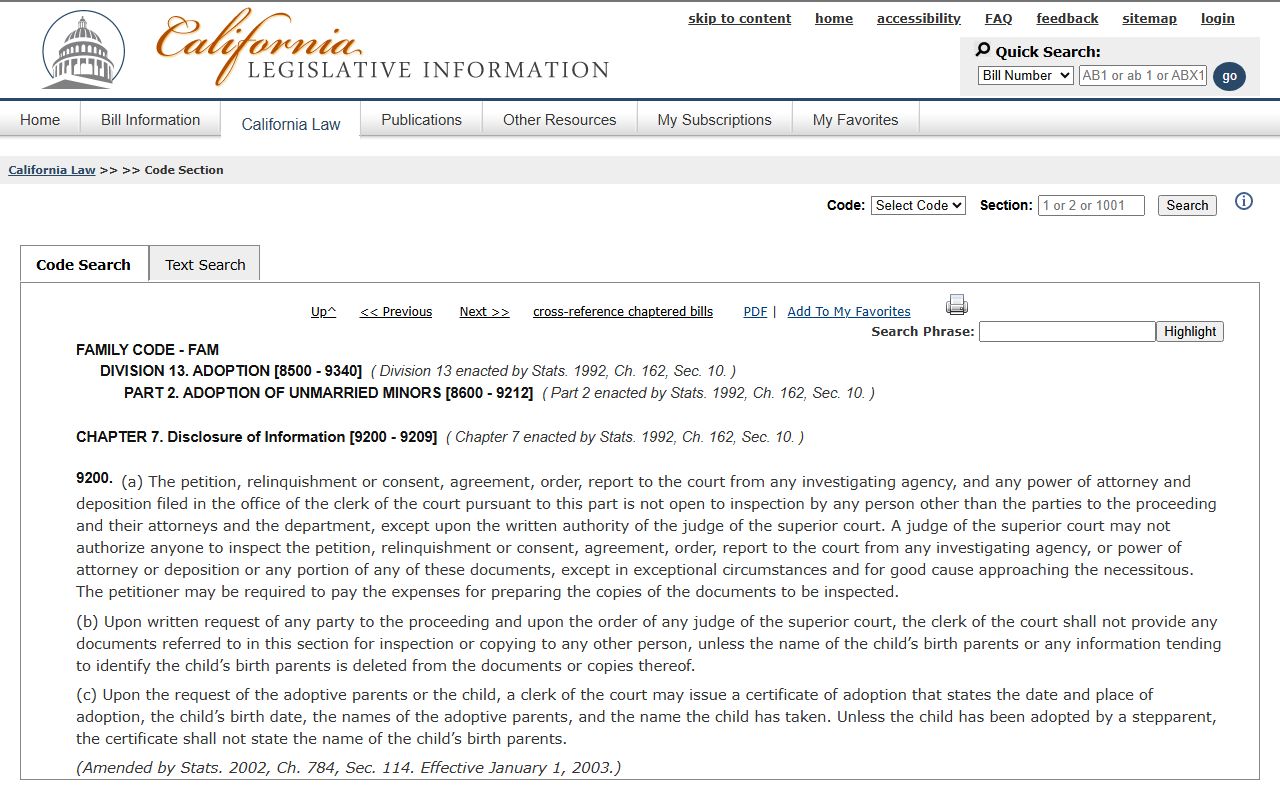
So a probate or adoption docket may not expose the full file contents. A person seeking adoption records usually must petition the court and show a legal basis the court will accept.
This confidentiality protects the privacy of everyone in an adoption, including the child. It is not a barrier meant to frustrate honest requests, but a rule the law sets on purpose. Adult adoptees and birth relatives who want information often work through specific legal channels rather than a public record search. The court or the Self-Help Center can explain which path fits a given situation.
Common Probate Terms
Probate uses words that are easy to mix up. A short glossary helps you read a record. The definitions below cover the terms that come up most often.
- Testator
- The person who made a will.
- Executor
- The person named in a will to carry it out.
- Intestate
- Dying without a valid will.
- Estate
- The property a decedent leaves that is subject to probate.
- Conservator
- A person the court appoints to manage an adult who cannot manage their own affairs.
- Guardian
- A person the court gives authority over a child or a minor's estate.
An inventory, which lists and values estate assets, is another term you will see early in a case. A letters document is the court's grant of authority to a representative, conservator, or guardian.
Probate Court Contact and Fees
Probate matters are filed at the Main Courthouse, and the Civil or Probate clerk handles files and copies. For a certified copy of a probate order, contact the clerk. The contact card has the main details.
Superior Court Probate Division
Main Courthouse
800 11th Street
Modesto, CA 95354
(209) 530-3100
Probate filing fees follow California's statewide civil fee schedule, which the court applies. Confirm the current amount with the court before you file, since published fee line items change and were not listed in the source material for this resource. If you cannot afford the fee, the court accepts fee-waiver requests, and the Self-Help Center can help with the forms. Copy and certification fees for finished documents are separate from the filing fee.