
How to Find Recently Released Stanislaus County Inmates
There is no standalone released-inmate roster on the Sheriff's site. The official pages did not expose one. Instead, you confirm a release through the current custody lookup, a notification service, the court docket, and the state or federal locator that matches the person's path. Each tool answers part of the question, and together they give a reliable answer.
Start with the basics. Run these checks to confirm whether someone has been released from county custody.
- Search the Sheriff's inmate lookup by name; a no-result can mean the person is no longer in county custody.
- Check the Superior Court case index for a release order or a recent disposition.
- Set up a notification through VINELink for a status alert.
- Call detention records directly if you need to confirm a release right away.
- If the person was sentenced to state or federal custody, use the matching locator below.
Do not rely on a stale screenshot. Custody changes fast, and a name that showed in custody yesterday may be released today.
It helps to know why no single list exists. A released-inmate roster would be a moving target, updated by the minute as people post bail, finish a sentence, or transfer out. It could also raise privacy and safety concerns. So the Sheriff keeps a current custody lookup, and a release shows up as the absence of a record rather than a separate published list. That is why pairing the lookup with a phone call or a court check is the right move.
Setting Up Release Notifications
The simplest way to learn about a release is an alert. VINELink is a custody-status notification system that can tell you when a person's status changes, when the agency takes part. You register a name and choose how you want to be told.
The VINELink service asks you to pick a state and agency, then search by offender name or ID. After that, you can register for phone or email notifications.
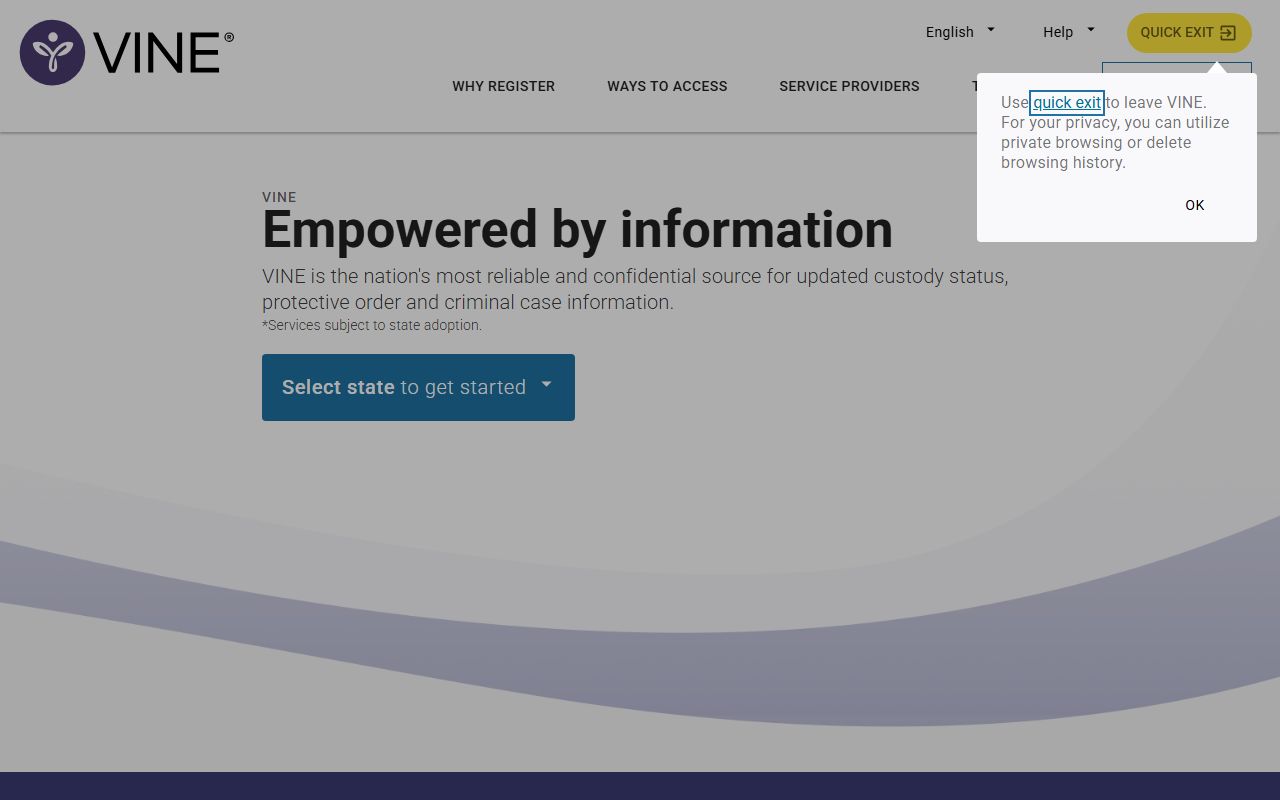
Notifications depend on the agency joining the system. For a victim who wants advance notice of a release, this is a key tool, though a direct call to the agency is still the surest check.
Set up the alert as early as you can. The value of a notification is the warning it gives before a release, and that only works if you register ahead of time. Keep your contact details current so the alert reaches you. If the agency does not take part in the system for a given person, fall back to the court docket and a direct call to detention records.
Searching State and Federal Released Inmates
County jail is not the only custody system. A person sentenced to state prison moves into the California Department of Corrections and Rehabilitation. A federal case lands someone in Bureau of Prisons custody. Each has its own locator with its own search fields.
For state prison custody, the CDCR inmate locator searches by number or name. The table lists its fields.
| Field | Type | Required | Notes |
|---|---|---|---|
| CDCR Number | Text | One of two paths | The state prison ID, if known. |
| Last Name | Text | For name search | State custody only, not county jail. |
| First Name | Text | No | Narrows the search. |
For federal custody, the Bureau of Prisons locator offers more search keys.
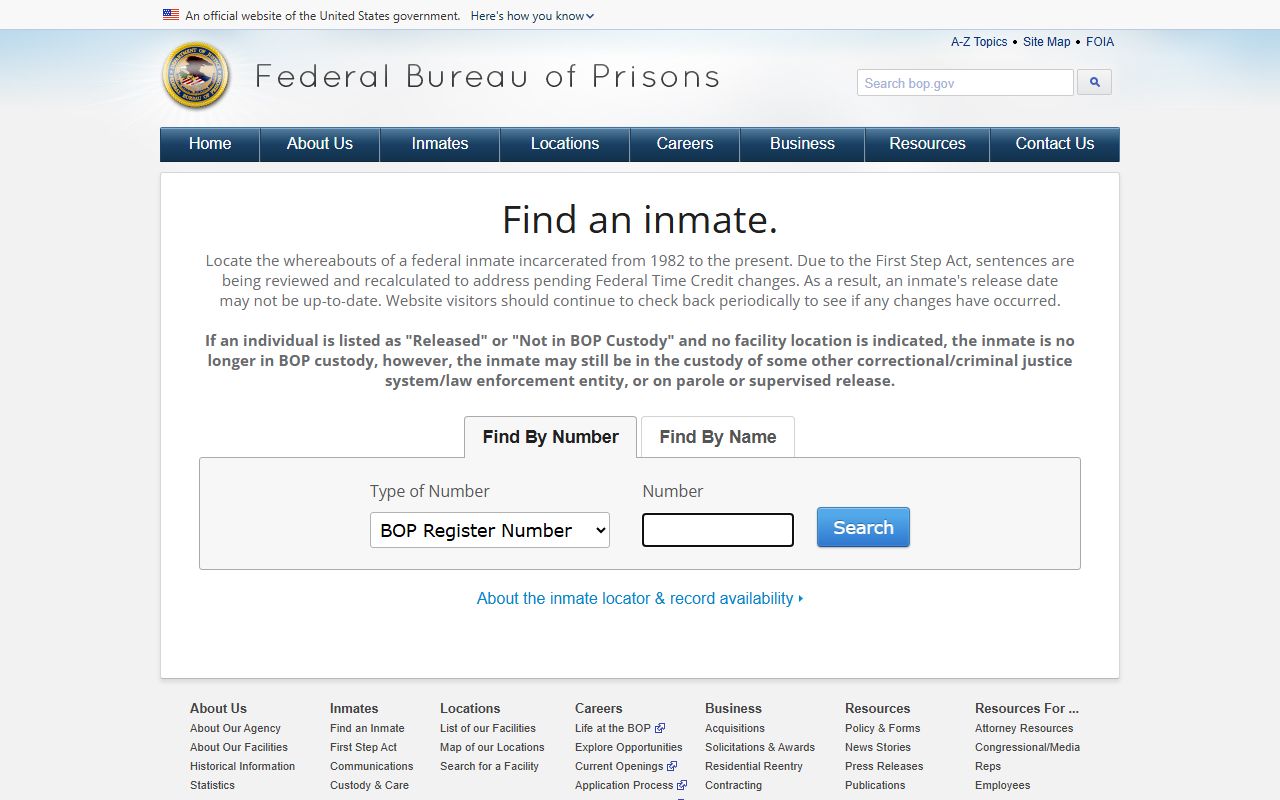
| Field | Type | Required | Notes |
|---|---|---|---|
| BOP Register Number | Text | One of two paths | Also accepts DCDC, FBI, or INS number. |
| First / Middle / Last Name | Text | For name search | Federal custody only. |
| Race / Sex / Age | Dropdown | No | Helps narrow a common name. |
A county jail inmate is not a CDCR inmate unless sentenced to state custody, so pick the right system before you search. A name that returns nothing in one system may sit in another. If the case ended with a state prison sentence, search CDCR. If it was a federal case, search the Bureau of Prisons. And if the person is still local, the county roster is the right place. Matching the person to the correct custody path saves a lot of dead-end searches.
Verifying Release in Person or by Phone
Online tools are a start, not a guarantee. The safest verification is a current Sheriff lookup paired with a direct call to detention records, or a check of the court docket for case status. A live call cuts through the lag that online data carries, and a clerk can confirm whether a court order to release has actually been entered.
County release can happen after bond is posted, charges are rejected, a judge orders release, a sentence ends, or custody is transferred. Each path can update the roster at a different speed. When a family needs to know for sure, the phone beats the screen.
Have key details ready when you call. The person's full name, date of birth, and any booking number speed up the check. Property release and pickup also follow their own steps, so ask about those at the same time if they apply. A short call can answer in minutes what a web search leaves unclear.
The Sex Offender Registry
Release status and registry status are different questions. California keeps a public registry of registered sex offenders, searchable by the public. It is separate from any jail roster or release list.
The California Megan's Law site lets you search by name or by map and address. The table lists its main search options.
| Field | Type | Required | Notes |
|---|---|---|---|
| Name Search | Text | One path | Search a registrant by name. |
| Map / Address Search | Map | One path | Search by location. |
| City / ZIP Filter | Text | No | Narrows a map search. |
| Terms Acknowledgement | Checkbox | Yes | Required before search. |
Profile data depends on each registrant's disclosure status under state law, so some entries show more than others. The registry tells you whether a person is a registered offender and, for many, where they are listed. It does not tell you whether that person is currently in custody. For custody, you still use the jail roster or a state or federal locator. Reading the two tools together gives the clearest picture.
Parole and Probation Information
Release rarely means the end of supervision. A person may leave custody onto parole, probation, or another form of community supervision. In the county, the Probation Department runs services and supervision for people on local terms.
The Stanislaus County Probation services page describes its Day Reporting Center and service connections.
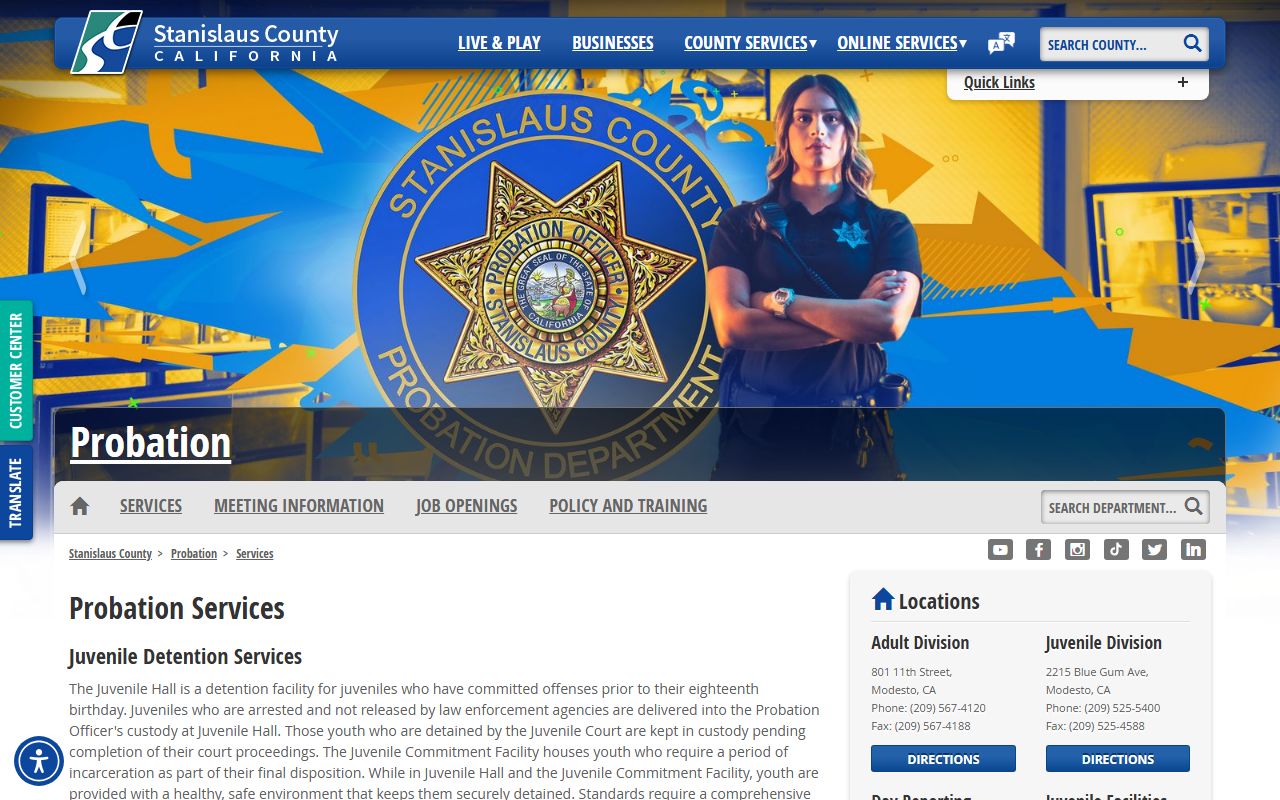
For a person released from state prison, parole and reentry run through the state corrections system instead of the county. Parole and probation are not the same thing. Parole follows a state prison term, while probation is a county-supervised alternative or follow-on to a sentence. Both come with conditions, and a violation can send a case back to court or custody. Knowing which one applies tells you which office to call about a person's supervision.
Reentry Resources in Stanislaus County
Coming home brings real hurdles, from housing to benefits to clearing an old record. Several resources help. The county Probation Day Reporting Center connects people to services. The court Self-Help Center assists with record clearing and family-law issues that often follow a release.
Self-Help Center
800 11th Street, Room 220
Modesto, CA 95354
(209) 548-6237
Self.Help@StanCt.org
The state also keeps a free clean-slate guide for record clearing. For the full set of options, see arrest records. Legal aid and the county law library can also help with housing, benefits, and family-law barriers that come up after a release. Lining up these resources early makes the move back into the community smoother.
Civil Rights Restoration After Release
People often ask what rights come back after a case ends. Some depend on the offense and the sentence. California offers post-conviction relief, such as dismissal under Penal Code section 1203.4, which can change the public disposition of a conviction. It does not restore every right or erase the file.
Other matters, like firearm rights or certain licenses, follow their own rules and are not fixed by a single petition. A person who wants to restore a specific right should get legal advice or use the court Self-Help Center to find the correct path.
Clearing a record is part of this picture too. A dismissal can change how a conviction reads in a public search, which helps with jobs and housing. Sealing relief exists for many arrests that did not lead to a conviction. None of this is automatic, and the right path depends on the case, so start with the Self-Help Center or a clean-slate guide before you file anything.