
How to Find Stanislaus County Arrest Records
An arrest record starts at the jail, not the court. When someone is booked into a Stanislaus County jail, the Sheriff's Office logs the name, the booking, and the custody status. The fastest way to find a recent arrest is the Sheriff's inmate lookup, where you type a name and search the current roster. For full roster details, see Stanislaus County inmate records.
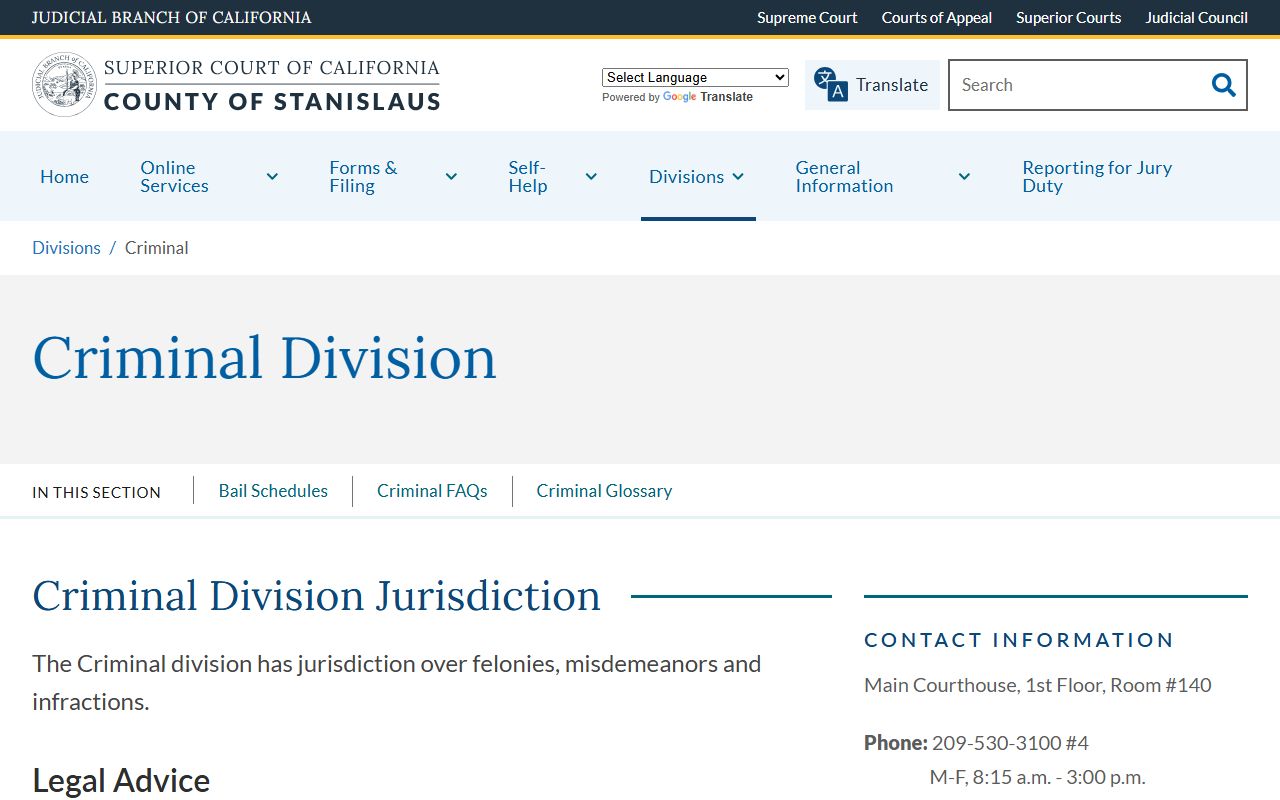
Once the District Attorney files charges, the matter becomes a Superior Court criminal case. From that point, the court record carries the case forward through arraignment, plea, and sentencing. The court's criminal division handles those filings.
So an arrest and a criminal case are two records in two places. The jail tracks custody. The court tracks the case. Many people need both.
Follow these steps to find a recent arrest in Stanislaus County.
- Open the Sheriff's inmate lookup and enter the person's name in the search field.
- Review the result for booking number, custody status, facility, and listed charges.
- If no result shows, the person may have been released, cited out, or never booked into the county jail.
- Once charges are filed, search the Superior Court case index by name for the criminal case.
- For a certified outcome, request the court record from the clerk rather than relying on a jail screen.
Arrest Record vs. Criminal Court Record
These two records get confused all the time. An arrest record is a law enforcement log of a booking. A criminal court record is the case the court builds after charges are filed. They come from different offices and answer different questions.
| Arrest Record | Criminal Court Record | |
|---|---|---|
| Kept by | Sheriff or arresting agency | Superior Court |
| What it shows | Booking, custody status, charges at arrest | Case filings, pleas, hearings, sentence |
| When it starts | At the time of arrest | When the DA files charges |
| Where to search | Sheriff's inmate lookup | Superior Court case index |
An arrest does not always lead to a charge. The DA may decline a case, so an arrest can exist with no matching court file. For the full case history, use Stanislaus County court records.
Charges vs. Convictions
A charge is an accusation. A conviction is a finding or admission of guilt. The gap between them matters, because many people read an arrest or a charge as proof of guilt. It is not. A case can end in dismissal, acquittal, diversion, or a plea to a lesser count.
| Charge | Conviction | |
|---|---|---|
| Meaning | The accusation filed by the DA | A guilty verdict or plea |
| Proof of guilt | No | Yes |
| Can be dropped | Yes, by dismissal or acquittal | Stands unless set aside |
When you read a record, check the disposition. That field tells you how the charge actually ended.
This matters for fairness and for accuracy. An arrest that never led to a charge, or a charge that was dismissed, should not be read as a conviction. California even lets people clear qualifying records later, which is covered further down this page. Always trace a charge to its final disposition before you draw any conclusion about a person.
Mugshots and Booking Information
A booking creates a set of records during intake. Staff confirm identity, inventory property, run a medical and security screen, take a booking photo and fingerprints, enter the charges, and assign housing. The booking photo is the mugshot most people ask about.
Public jail data may show a name, a booking number, custody status, the facility, and the charges on file. What appears depends on current custody data and the Sheriff's system, so treat any single screen as a snapshot. A booking photo is not a finding of guilt, and an arrest record does not prove a case outcome.
After booking, the timing of a first court date depends on the charge, the time of arrest, and weekends or holidays. A person may be released by citation, by posting bail, on their own recognizance, or by court order. Some are held until arraignment. Because custody changes fast, a booking record can look very different a day later. The Sheriff's lookup reflects the current count, not a fixed history.
The District Attorney and Public Defender
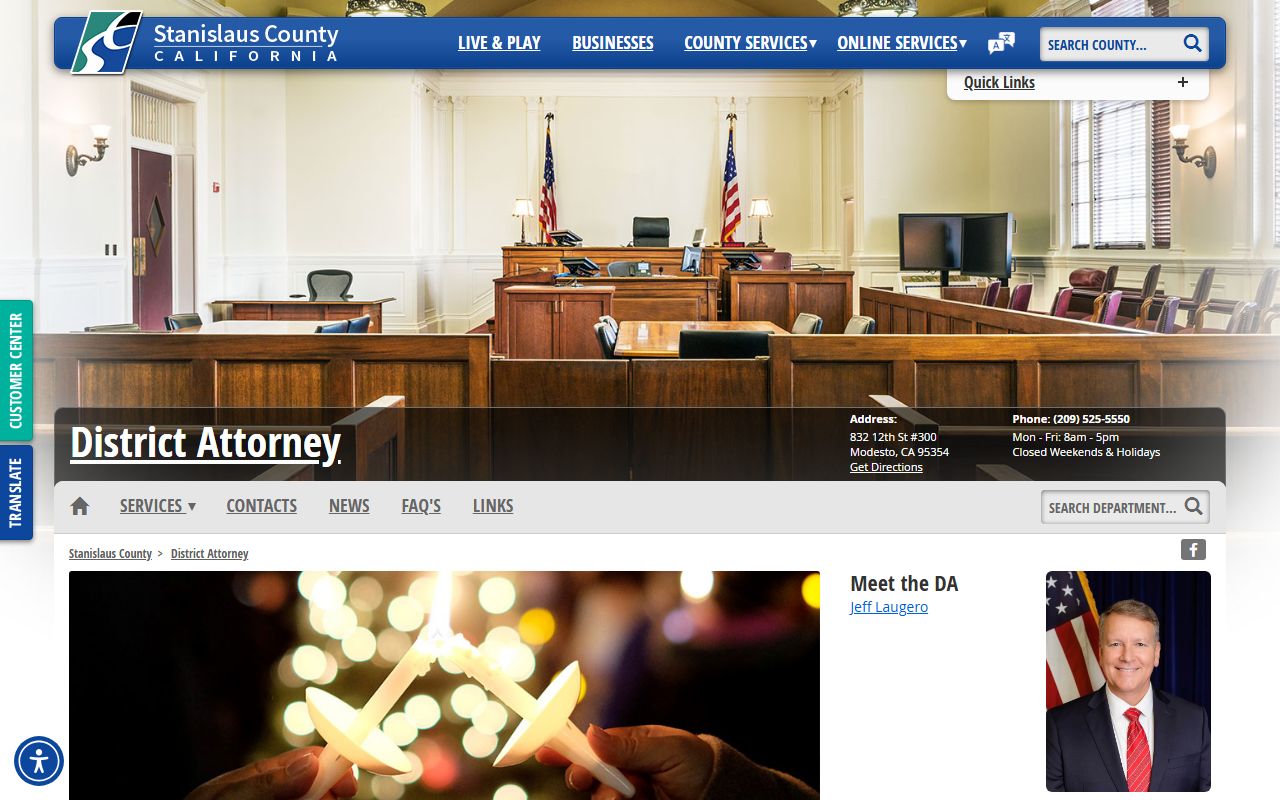
Two offices drive a criminal case. The District Attorney prosecutes the case for the People of the State of California. The Stanislaus County District Attorney handles all criminal cases filed in the county and runs a victim services unit.
On the other side, a person who cannot afford a lawyer is assigned counsel. The Stanislaus County Public Defender represents indigent defendants and also appears in collaborative courts such as drug court, mental health court, and Veterans Treatment Court.
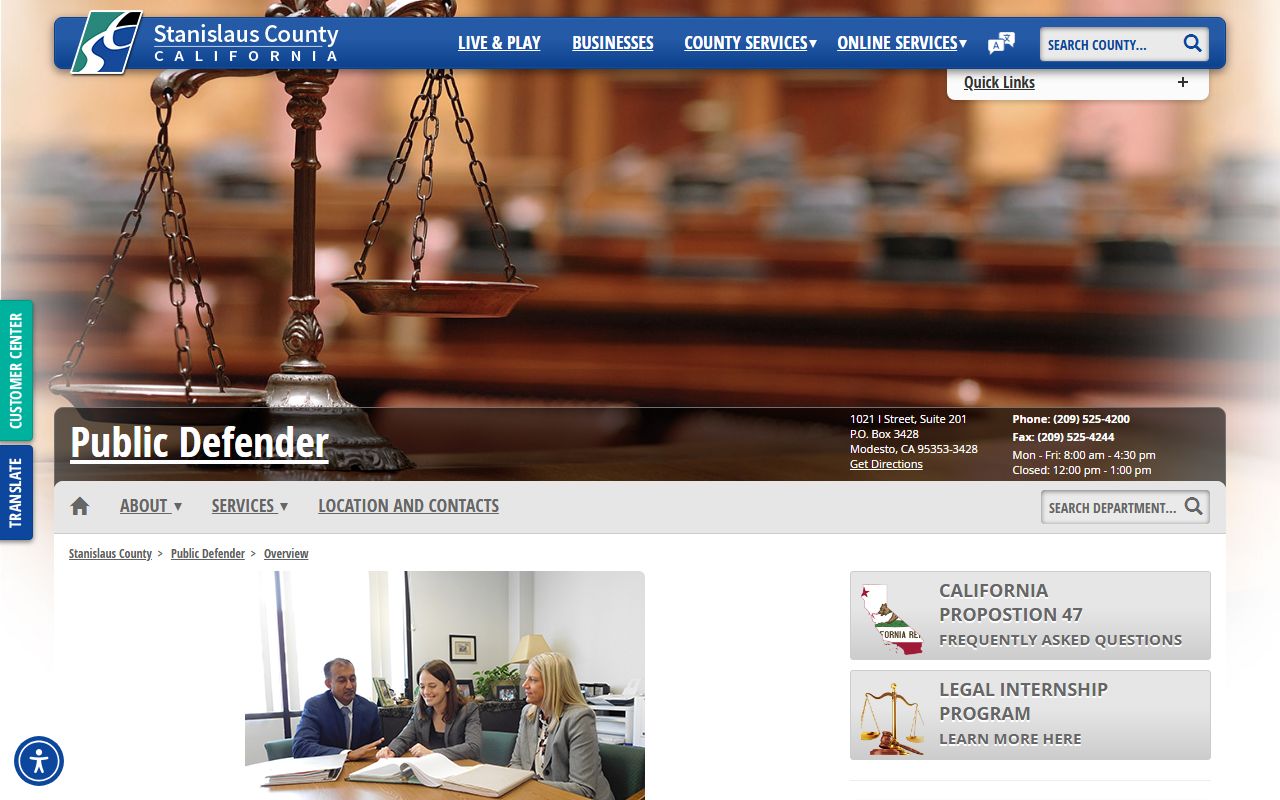
The court appoints the Public Defender after a financial review. Conflict cases go to alternate or panel counsel. The Public Defender is not a general civil lawyer, so it does not take routine civil disputes. Some DA investigators are cross-designated with the FBI to work cases at the federal level, which shows how local and federal criminal work can overlap.
What Is Public and What Is Restricted
Most adult arrest and criminal court data is public. Some is not. Juvenile records are confidential under Welfare and Institutions Code section 827. Sealed filings, diversion records, and protected-witness or victim details are held back. Mental health proceedings carry their own privacy limits. Even on a public case, the court redacts personal data such as Social Security numbers, financial account numbers, and the names of minors or victims.
There is also a key difference between a court file and a state rap sheet. A Department of Justice criminal history is not the same as a public court docket. Its release is controlled by Penal Code section 11105, which limits who can pull that history and for what purpose. So a public arrest search will not return a full state criminal history.
Law enforcement investigatory records add another limit. While a case is active, the Sheriff and DA may withhold investigatory files, and certain records stay exempt even after a case closes. That is why an arrest blotter rarely shows the full story. The court file, once charges are filed, is the public record most people should rely on for a case outcome.
Clearing or Sealing a Stanislaus County Record
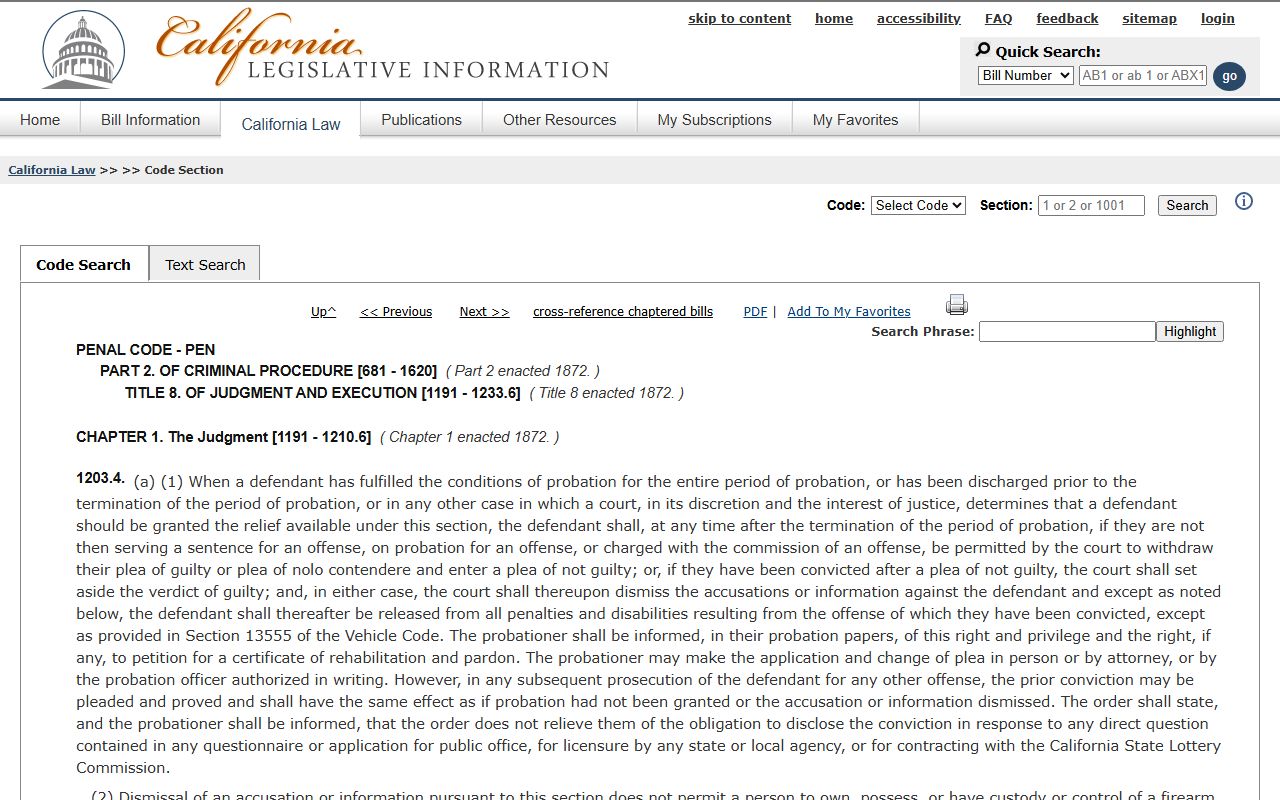
California gives people several ways to clear an old record. The most common is dismissal relief. Under Penal Code section 1203.4, a qualifying person can ask the sentencing court to set aside a conviction after probation. It changes the public disposition, though it does not erase the file.
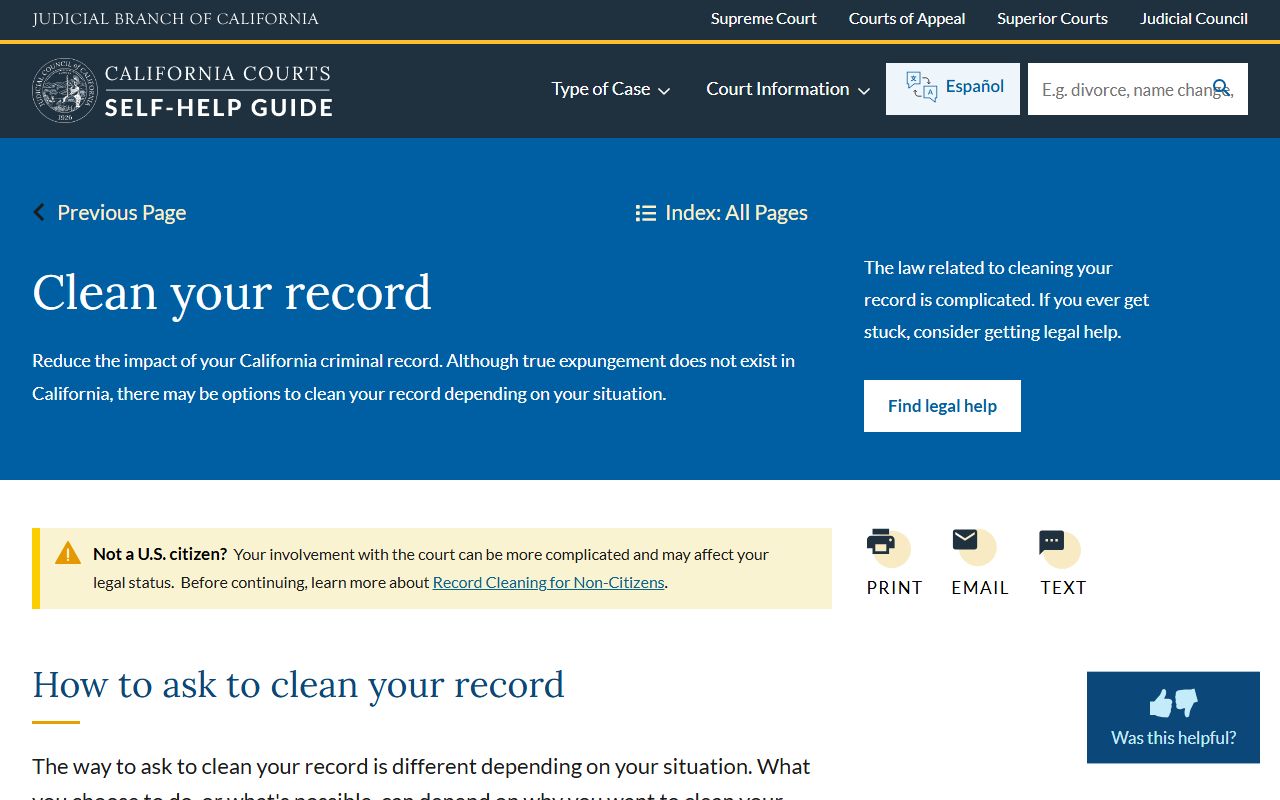
Other paths exist. Factual-innocence relief under Penal Code section 851.8 can seal and destroy arrest records when a person was factually innocent. Arrest-record sealing is also possible for many arrests that did not lead to a conviction. The state keeps free self-help tools for record clearing.
The table sums up two terms people mix up.
| Sealed | Expunged (Dismissed) | |
|---|---|---|
| What happens | The record is hidden from public view | The conviction is set aside and the case dismissed |
| Common path | Arrest sealing or factual innocence | Penal Code section 1203.4 relief |
| File destroyed | Sometimes, as with factual innocence | No, the file remains |
The Self-Help Center lists expungements among its services, so it is a good first stop. Relief is not automatic, though. A petition can be denied when probation was not completed, new charges are pending, restitution is unpaid, or the offense is one the law excludes.
Arrest Records and Background Checks
People often pull arrest data for a background check. Be careful here. Public jail and court data is not a certified criminal history, and it can be incomplete or out of date. It also may not reflect a dismissal or sealing that happened later. A name match is not proof either, since two people can share a name and birth year. For any real decision, get the certified record from the court and follow the lawful screening process.
Important: Information on this site cannot be used for employment, tenant, credit, or other FCRA-regulated screening. For those uses, follow the lawful background-check process and verify with the originating agency.