
How to Search Stanislaus County Court Records
The court runs a free Case Index Lookup. It is the main way to find a Stanislaus County case online. You can search by case number or by party name. The court's online services page describes it as a place to find case names and view some filed documents. Not every document is posted, and protected files are held back.
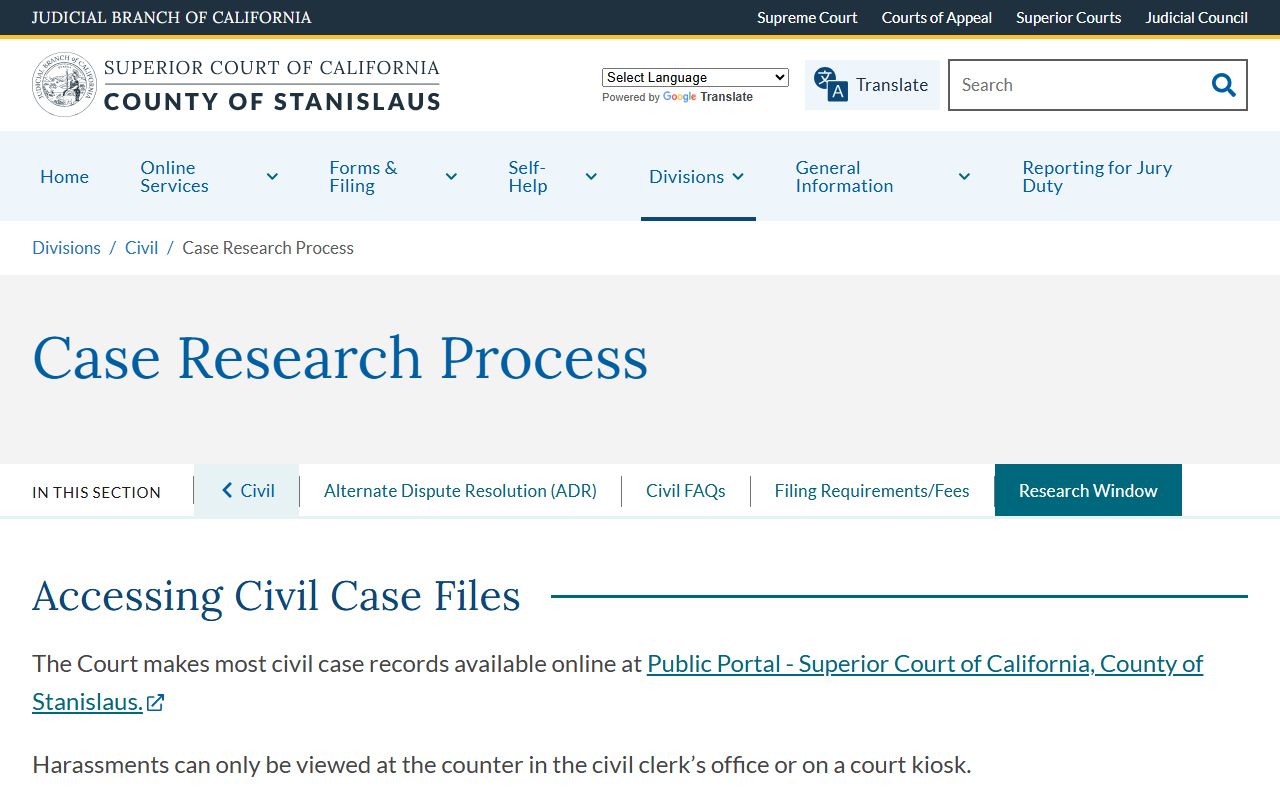
For civil files the court also keeps a research process for older or off-portal records. The civil case research page explains how to request files, do research, and order copies.
The portal covers many case types in one place. Civil, criminal, family, probate, small claims, and traffic cases can all surface in the same index. What you see for each, though, depends on the rules for that case type. A traffic case may route you toward the payment path instead of a full file. A confidential family or juvenile matter may show no result at all. So the portal is the right starting point, but it is not the whole record in every case.
Have your search terms ready before you start. A case number is best. A name works too, but plan to narrow it.
- Go to the Stanislaus public case portal, or reach it from the court's Online Services page.
- Pick a search mode. Use case number if you have it.
- For a name search, enter last name and first name, then add a case type or date range.
- Review the results for case number, name, filing date, type, and status.
- Open the case detail, then request a copy from the clerk if the document is not viewable online.
Stanislaus County Court Records Search Fields
The portal uses a handful of fields. The active fields can shift with the search mode and the case type. The table lists each field, whether you need it, and a short note.
| Field Label | Type | Required | Notes / Format |
|---|---|---|---|
| Case Number | Text | Only for number search | Use the exact Stanislaus Superior Court number. |
| Last Name / Business Name | Text | Only for name search | Party surname or company name. |
| First Name | Text | No | Narrows a person search. |
| Date of Birth | Date | No | May help on criminal or traffic searches. |
| Case Type / Category | Dropdown | No | Civil, criminal, family, probate, small claims, or traffic. |
| Filing Date From / To | Date | No | Narrows older searches by date. |
A reset or clear button shows up on most portal screens when you need to start over.
Types of Stanislaus County Court Records
The Superior Court files records by division. Each one creates its own paper trail. Most are open to the public, but a few categories are restricted by statute. The list below covers the main types you can pull.
The court divisions page lays out which division hears which cases, and that maps cleanly to the record types.
- Civil records, such as complaints, motions, judgments, and name-change petitions.
- Criminal records, such as complaints, pleas, sentencing orders, and warrants.
- Family records, such as divorce, custody, support, and restraining orders.
- Probate records, such as estates, conservatorships, and guardianships.
- Traffic and small claims records.
Civil records are public unless a filing is sealed. Criminal files are also public, but sealed, juvenile, diversion, and protected-witness data is held back. Family cases are mostly public on the docket, yet custody evaluations, minors' details, and confidential mediation papers are not. Small claims files are public too, though attorneys cannot represent parties at the hearing itself. Each record type lives in the same case index, so the search steps stay the same no matter which division filed the case.
What Stanislaus County Court Records Show
A public case detail returns a set of standard fields. The exact format depends on the division and the year. The table breaks down the fields you will most often see in a Stanislaus County record.
| Field | What It Shows |
|---|---|
| Case Number | The official court ID for the case. |
| Filing Date | The date the case was opened. |
| Parties | The people or entities in the case; some names may be withheld. |
| Docket Entries | Filings, hearings, minute orders, judgments, and notices. |
| Hearings | Date, time, department, event type, and result when public. |
| Disposition | The outcome, such as dismissed, judgment, or pending. |
Financial entries, like fines, fees, restitution, or bail, also appear on many cases. Sensitive data such as Social Security numbers and account details is redacted.
Reading the docket takes a little practice. A minute order is the clerk's summary of what the court did on a given day. A disposition is the outcome of a charge or the whole case. In a criminal matter, the caption reads as People of the State of California versus the defendant. In a civil matter, it lists the plaintiff against the defendant, or a petitioner against a respondent. Attorney names show up where they are public. When an entry is unclear, the clerk's office can explain what a code or abbreviation means.
Public Access Framework for Stanislaus County Court Records
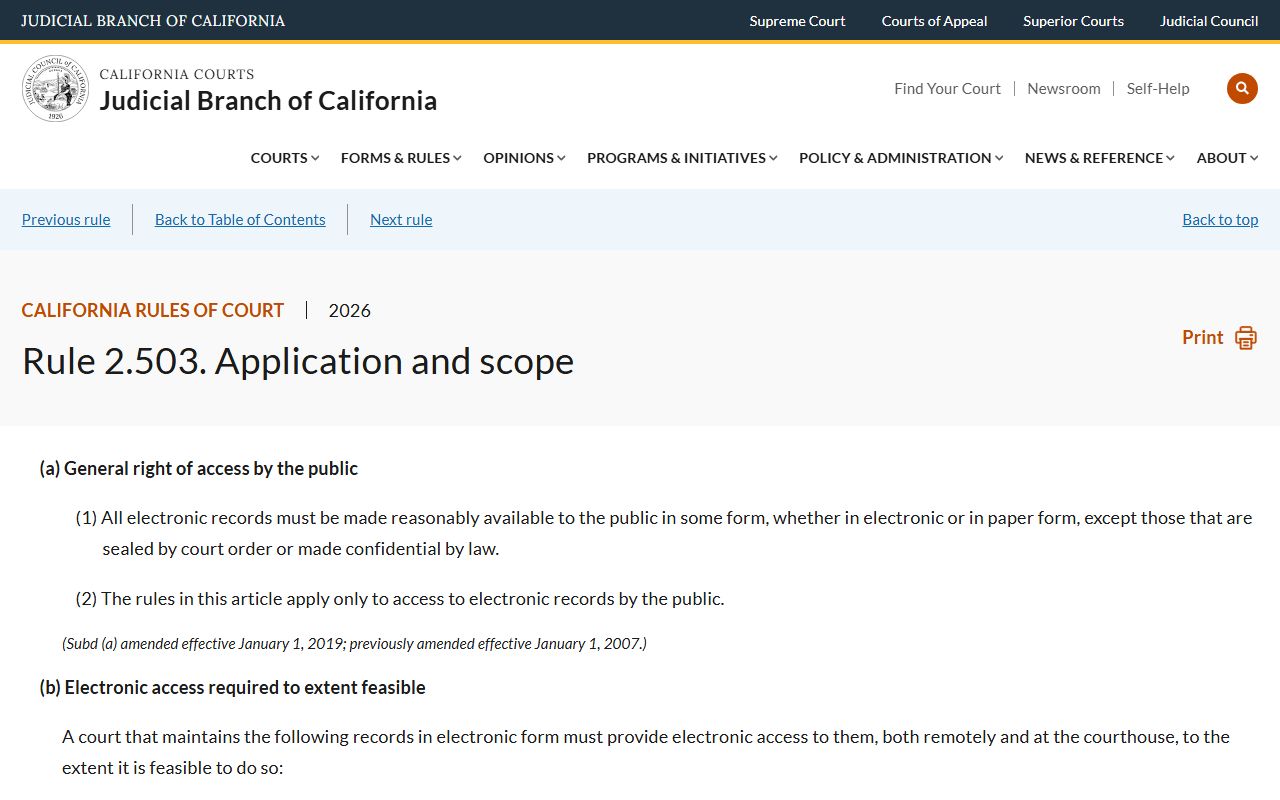
Court records follow the California Rules of Court, not the county records act. California Rule of Court 2.503 sets public access to electronic trial court records and separates courthouse access from remote online access. So a file can be public at the clerk's counter yet not posted online.
Anyone may view a public record. You do not need a reason. Copy and certification fees apply, and the clerk may ask for ID on certain requests.
It helps to know the two tracks. County offices, like the Sheriff or the Clerk-Recorder, answer under the California Public Records Act. Court case files do not. They follow the court rules and case-specific orders. So a public records request to the county will not pull a court docket, and a request to the court clerk will not pull a deed or a marriage record. Send each request to the right office the first time.
Note: Remote online access is narrower than courthouse access, so some public records can only be viewed or copied in person at the clerk's office.
Records That Are Sealed or Confidential in Stanislaus County
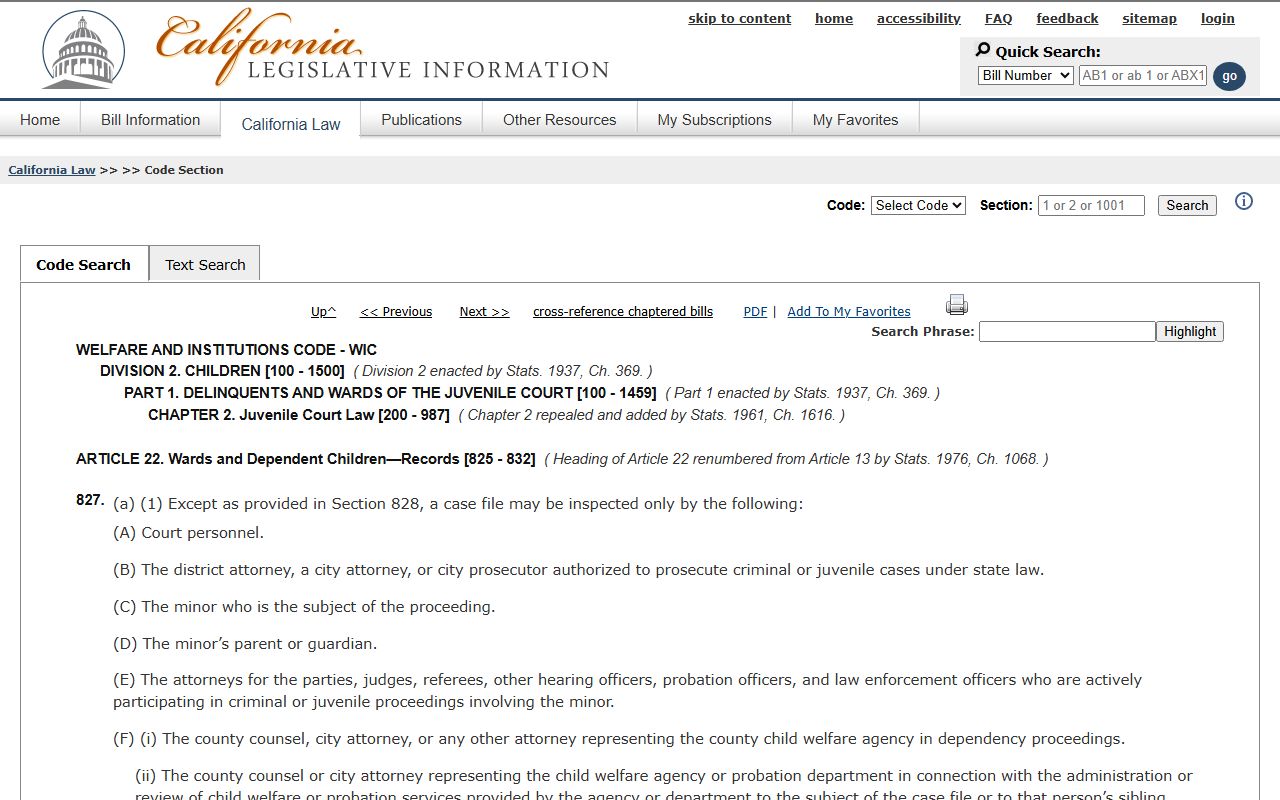
Some records are closed by law. Juvenile case files are confidential under Welfare and Institutions Code section 827. Access is limited to parties, attorneys, agencies, and people the court approves.
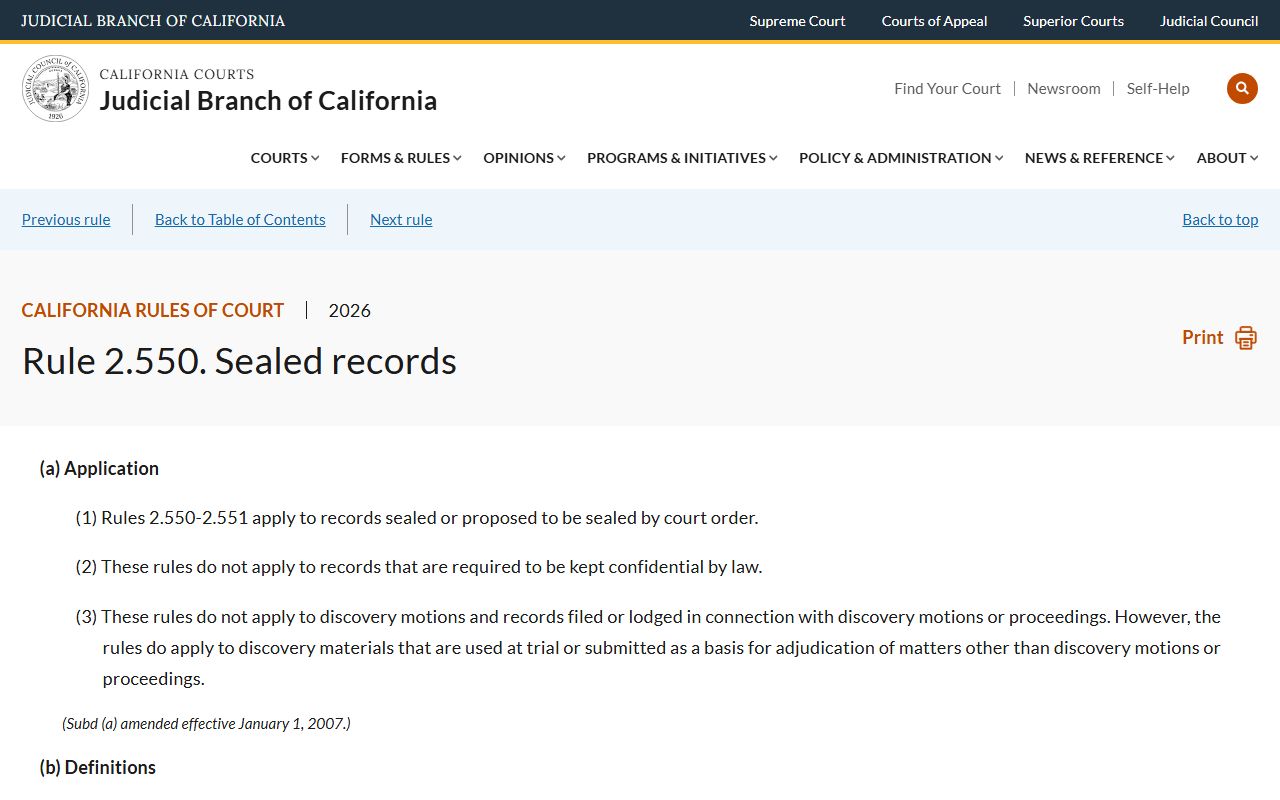
Other sealed filings follow California Rule of Court 2.550. A court must find an overriding interest and tailor the seal narrowly. To view a sealed record, a person files a motion under the matching rule and shows a reason the court will accept.
Adoption, mental health, and many protective-order details are also held back.
California also gives people ways to clear an old record. Penal Code section 1203.4 lets a qualifying person ask the sentencing court to dismiss a conviction after probation. It does not erase the file, but it changes the public disposition. Other paths include factual-innocence relief and arrest-record sealing for arrests that did not lead to a conviction. The Self-Help Center lists expungements among its topics, so it is a good first stop for someone trying to clean a Stanislaus County record.
In-Person Court Record Requests
When a record is not online, go to the courthouse. The clerk can pull the file, make copies, and certify them. Bring the case number, a photo ID, and payment for copy fees. Call ahead for older or archived files, since those may take longer to retrieve.
Older records may be imaged, stored off-site, or no longer kept in paper. The court manages how long it keeps files under state retention rules, so a very old case might need a research request rather than a quick counter pull. A certified copy carries the court seal and is the version courts and agencies accept. A plain copy is fine for personal reference but is not accepted as proof in a legal matter.
Stanislaus Superior Court, Main Courthouse
800 11th Street
Modesto, CA 95354
(209) 530-3100
Mon-Fri, business hours
Federal Court Records and Stanislaus County
Not every case is a state case. Federal crimes, federal civil rights claims, and bankruptcy do not appear in the Superior Court index. Bankruptcy filings go to the U.S. Bankruptcy Court for the Eastern District of California, a separate system with its own docket.
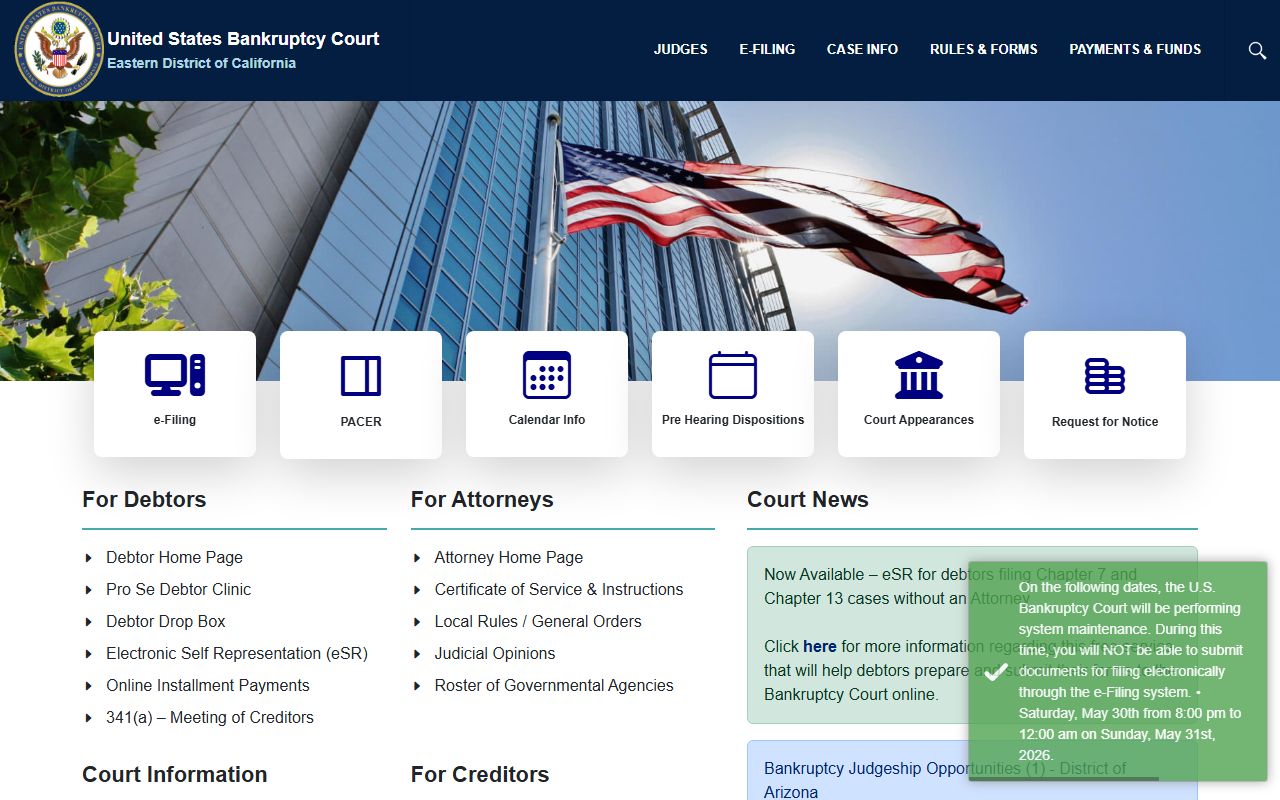
Federal dockets are reached through PACER. If you cannot find a case in the Stanislaus portal, it may be a federal matter.