
How to Search Stanislaus County Traffic Court Records
Traffic records start with the citation. The court handles traffic citations and links a payment portal through its online services. The Traffic Division defines traffic court as the division that deals with violations of traffic laws and other minor offenses, such as speeding and expired licenses.
The court's Traffic Division page explains citation handling and the payment path.
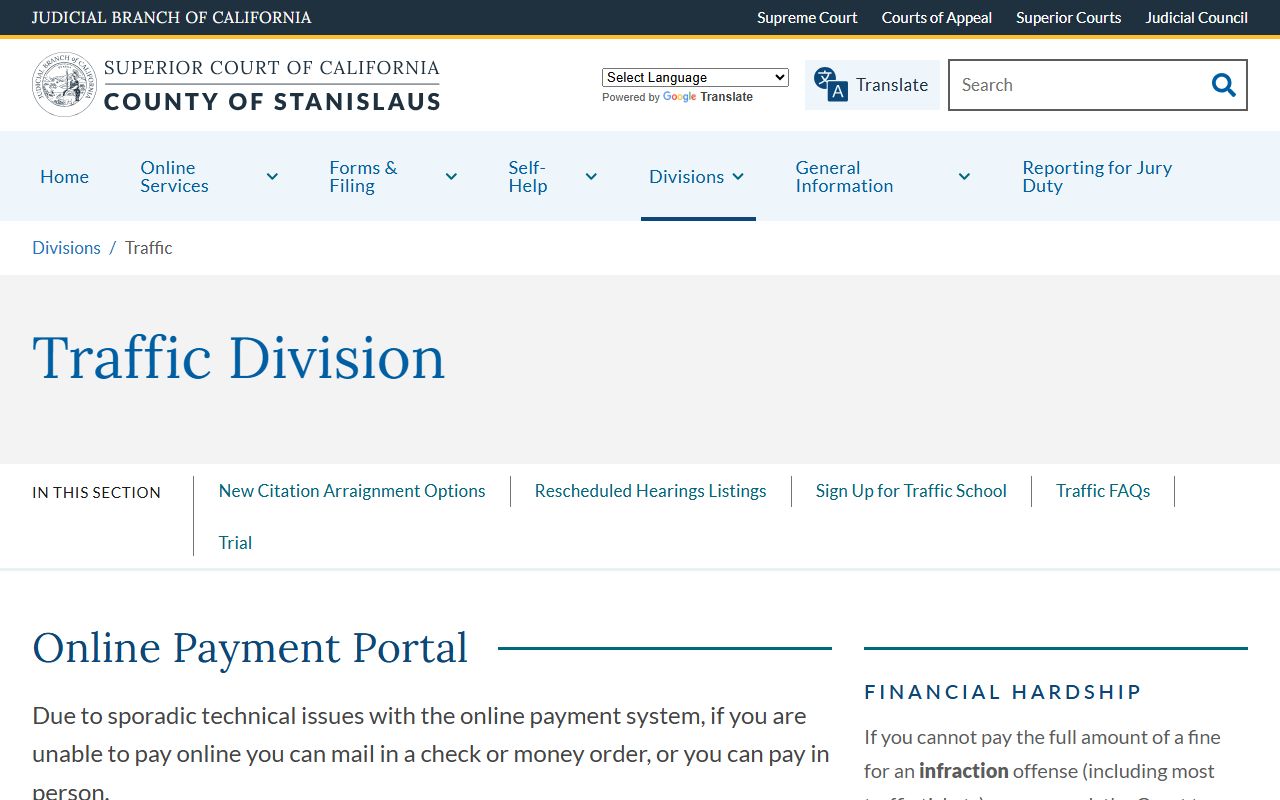
For a new ticket, wait until the court receives it, then use the citation number to find or pay it. A criminal traffic charge, like a DUI, follows the criminal case index instead.
Which Courts Handle Traffic Cases in Stanislaus County
In California, traffic cases are part of the Superior Court, not a separate municipal court. The Superior Court Traffic Division handles infractions, while serious driving offenses move to the Criminal Division. There is no county-level traffic court outside the Superior Court here.
So an infraction, like speeding, stays on the traffic side, while a misdemeanor or felony driving charge, like a DUI, becomes a criminal case. Both run through the same Superior Court system, just different divisions. For full case history on a criminal traffic matter, see court records.
Types of Traffic Cases on Record
Traffic records cover a range of violations, from minor equipment issues to serious criminal driving. Knowing the category tells you where the case lives and how serious it is. The list below sorts the common types.
- Moving violations, such as speeding, unsafe lane changes, and red-light or stop violations.
- Nonmoving and equipment issues, such as expired registration or a correctable defect.
- Misdemeanor or criminal traffic, such as DUI, reckless driving, or driving on a suspended license.
- Juvenile traffic, which may follow juvenile rules and confidentiality.
- Commercial driver matters, where consequences can differ for a CDL holder.
Correctable violations can often be cleared with proof of correction by the due date.
What Stanislaus County Traffic Court Records Show
A traffic court record tracks the citation and the case. The exact fields depend on the violation and the case stage. The table breaks down what a traffic record typically shows.
| Field | What It Shows |
|---|---|
| Citation Number | The number printed on the ticket. |
| Violation / Code | The offense and the Vehicle Code section. |
| Appearance / Due Date | The deadline to respond or appear. |
| Fine / Bail | The amount due or posted. |
| Traffic School | Eligibility and completion status. |
| Failure to Appear / Pay | Any FTA or FTP entry on the case. |
| Disposition | The outcome of the citation. |
Proof of correction, for a fixable violation, also appears once the court accepts it.
Searching by Citation Number vs. by Name
The citation number is the key to a traffic record. The payment and lookup tools are built around it, and it points straight to one case. A name search is less direct for traffic matters, since the court often routes you through the citation or case path instead. The table lists the fields you may use.
| Field | Type | Required | Notes |
|---|---|---|---|
| Citation / ticket number | Text | Usually yes to pay | Use the number printed on the citation. |
| Case number | Text | Sometimes | Some traffic matters get a court case number. |
| Date of birth | Date | Maybe | Used to verify the person searching or paying. |
| Search / Submit | Button | n/a | Starts the lookup. |
| Pay | Button | n/a | Opens the payment path once the citation is found. |
A driver's license number may be requested on a payment system, but that is sensitive input from the person paying, not public result data.
Paying or Contesting a Stanislaus County Traffic Ticket
You can pay a ticket or fight it, and the court sets the path for each. Acting before the due date keeps extra fees and a failure-to-appear from piling on. The court self-help services can help if you are not sure how to respond.
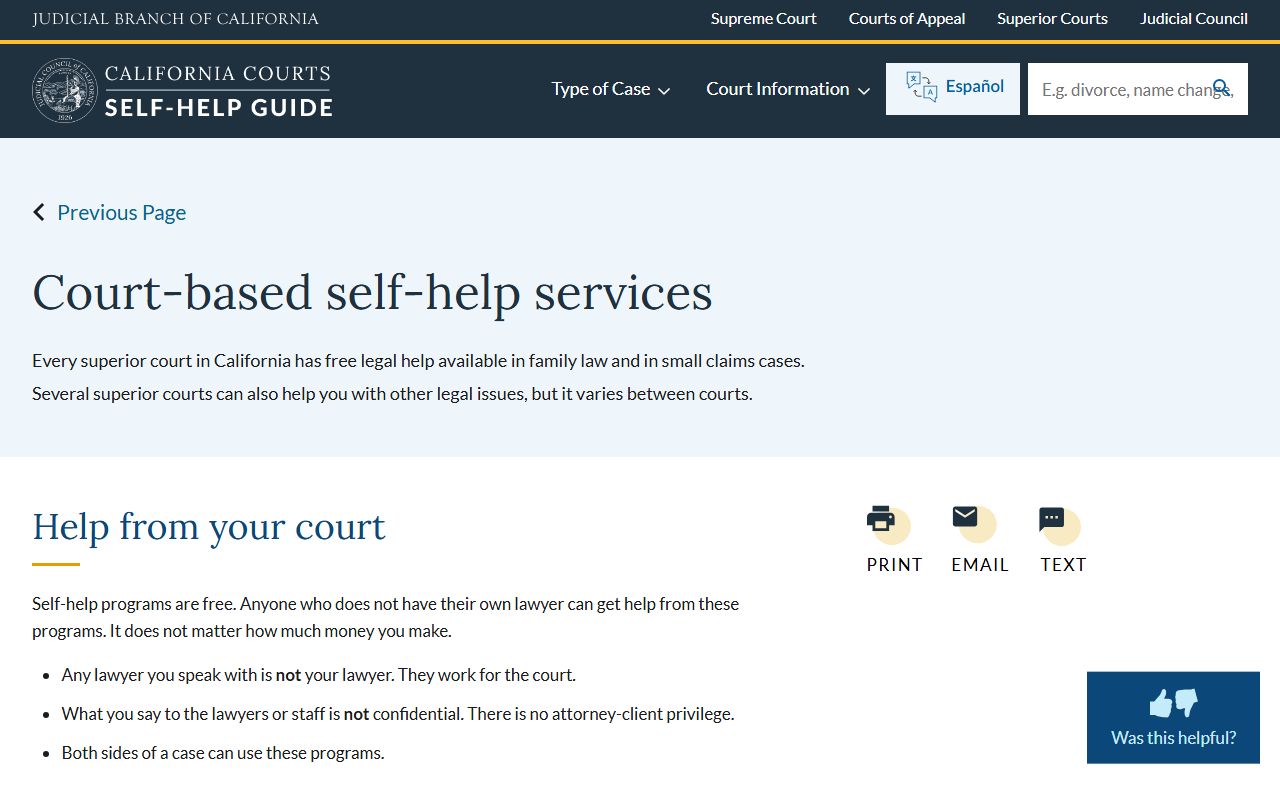
Use these steps to pay or contest a ticket.
- Wait for the court to receive and process a newly issued citation.
- Use the court's online services or traffic payment portal and enter the citation or case details.
- Review the violation, due date, fine or bail, and traffic school eligibility.
- To pay, follow the court-approved payment path and keep the confirmation.
- To contest, follow the court's steps to plead not guilty, request a trial, or use a trial by written declaration if offered.
For a correctable violation, get the required proof and submit it before the due date.
Public Access Laws for Traffic Court Records
Traffic court records follow the same access rules as other court records. The California Rules of Court govern electronic access, and remote online access is narrower than courthouse access. So a traffic record may be searchable in part online while the full file sits at the court.
A county public records request does not replace court record access. Court files, including traffic, are reached through the court, not a California Public Records Act request to a county agency. For the broader access framework, see court records and public records.
Court Traffic Records vs. State Driver Records
This is the split that confuses drivers most. A court traffic record is the case file in the Superior Court. A DMV driver record is a separate file kept by the state. They are not the same document, and they are not kept by the same agency. The comparison block sorts them out.
| Court Traffic Record | State Driver Record | |
|---|---|---|
| Kept by | Stanislaus Superior Court Traffic Division | California DMV |
| What it shows | Citation, violation, fine or bail, traffic school, disposition | License status, points, suspensions, reportable convictions |
| How to access | Court traffic tools and the clerk | DMV identity or account process |
| How to fix an error | Through the court on the case | Through the DMV on the driving record |
So clearing a citation in court is not the same as fixing your DMV record, and you may need to address both.
CDL and Commercial Driver Records
Commercial drivers face stricter rules. A CDL holder can lose options that other drivers have, since traffic school may not mask a violation the same way. The stakes are higher because a CDL is tied to a person's livelihood.
If you hold a CDL, check both the court consequence and the DMV consequence before you pay a ticket. What looks like a simple infraction can carry a heavier hit to a commercial license, so it is worth confirming before you act.
DUI and DWI Cases
A DUI is not a simple traffic infraction. It is a criminal matter that moves through the Criminal Division, not the traffic calendar. The court record, the consequences, and the process are all more serious than a standard ticket.
For how a DUI or other criminal driving charge is handled, including arrest and case history, see arrest records. The traffic tools described here are for infractions, not criminal driving offenses.
Traffic School and Deferred Options
Many drivers can attend traffic school to keep a point off their record for an eligible violation. The court sets eligibility and the steps, and not every citation or driver qualifies. Completing an approved course on time is the key.
Eligibility can depend on the violation, your recent history, and your license type. A CDL holder, for example, may not get the same benefit. Confirm your eligibility with the court before you sign up, since paying first can sometimes affect your options.
Sealing or Expunging Traffic Records
Most infractions are minor and resolve with payment or traffic school. A criminal traffic case, though, can carry the same record-clearing options as other criminal matters. California offers dismissal relief and arrest sealing for qualifying cases.
So a DUI handled as a criminal case may be eligible for post-conviction relief, while a paid speeding ticket simply closes. For the record-clearing options on criminal traffic matters, see arrest records, and use the court Self-Help Center to find the right path.
Fees for Traffic Records and Citations
Traffic costs come in a few forms, and they are not a single flat fee. The amount you owe depends on the violation and the choices you make. The table sorts the common fee types.
| Fee Type | What It Covers |
|---|---|
| Fine / bail | The base amount for the violation, set by the bail schedule. |
| Traffic school fee | The cost to attend an approved course, plus a court fee where it applies. |
| Late / failure-to-pay fee | Added cost when a deadline is missed. |
| Record copy fee | The cost to get a copy of a traffic case document. |
Exact amounts vary by citation and change over time, so confirm the current figure on the court's traffic tools or with the clerk. If you cannot pay, ask the court about options, since a missed deadline can lead to added fees and DMV consequences.